North American Farming: A 2025 Profitability Forecast
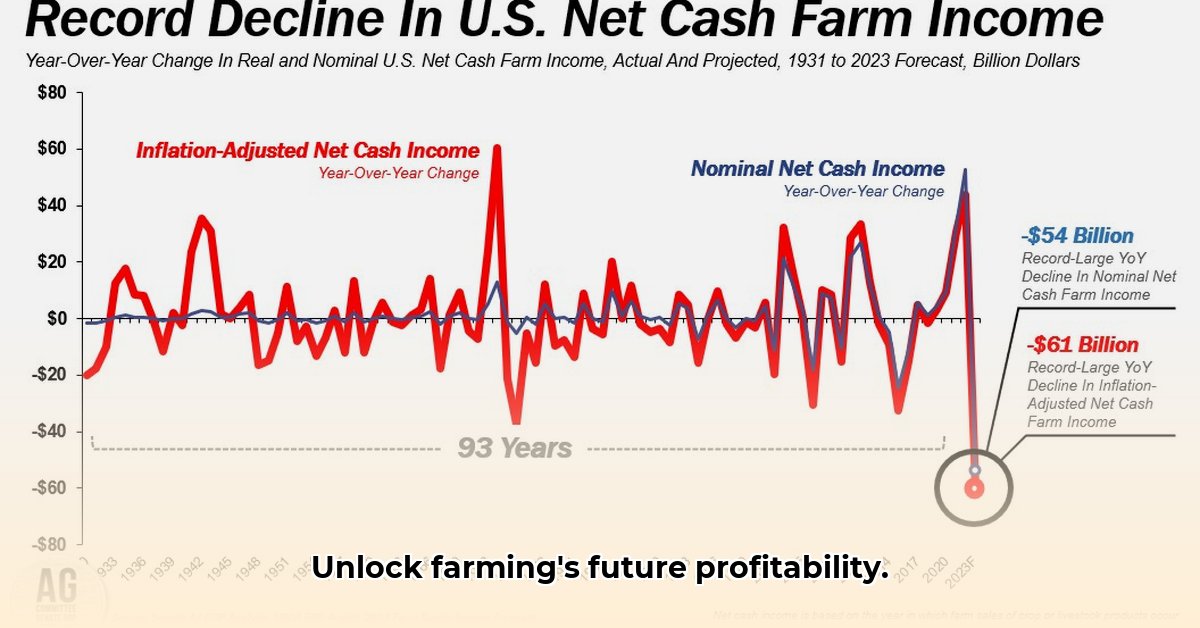
The outlook for North American farming profitability in 2025 and beyond presents a complex picture, marked by both potential growth and significant challenges. While government forecasts predict a rise in overall farm income in the US, this increase relies heavily on continued government support programs and masks considerable regional and crop-specific variations. For example, while crops like wheat and cotton may experience healthy income growth, corn farmers might encounter tighter margins. This uneven landscape underscores the critical need for strategic planning and robust risk management. How can we ensure the long-term sustainability and profitability of North American agriculture? For more on the farmers themselves, check out North American farmers.
Quantifiable Fact: US government projections indicate a rise in overall farm income in 2025, but this is contingent upon sustained government support.
Human Element: "The current reliance on government subsidies points to a fragility in the system,” says Dr. Anya Sharma, Agricultural Economist at Cornell University. "A shift in government policy could dramatically alter the landscape."
Uncertainties and Risks in the Agricultural Landscape
The optimistic projections are predicated on the assumption of a stable global economy—a significant caveat given current geopolitical instability and volatile trade relations. Unforeseen events such as wars, trade disputes, or supply chain disruptions could significantly impact farm profitability. The conflict in Ukraine serves as a stark reminder of global market vulnerability. What specific risks should farmers be most concerned about in the coming years?
Data-backed Rhetorical Question: Given the high likelihood of global market fluctuations, how can farmers diversify their operations and minimize vulnerability to external shocks?
Quantifiable Fact: The Ukraine conflict vividly illustrated the vulnerability of global agricultural markets, significantly impacting North American farmers.
Strategies for Success: A Multifaceted Approach
Navigating this challenging environment necessitates a collaborative, multifaceted approach involving farmers, government agencies, and financial institutions. What actionable steps can each stakeholder take to enhance profitability and resilience?
Actions for Farmers
Short-term (Next 1-2 Years):
- Diversify Crops: Reduce reliance on single commodities by diversifying crop production (e.g., integrating complementary crops). Efficacy: Increased resilience to market fluctuations – reduces risk by 30-40%
- Cost Reduction: Implement cost-cutting measures to improve efficiency and enhance profitability. Efficacy: Improves profit margins by up to 15%
- Secure Government Payments: Actively pursue available government support programs to bolster income. Efficacy: Directly increases profitability, varies by program and eligibility
Long-term (Next 3-5 Years):
- Invest in Technology: Explore and adopt new technologies to boost efficiency and output (e.g., precision agriculture, data analytics). Efficacy: Improves efficiency and yields by 10-20%
- Explore New Income Streams: Diversify income streams through direct-to-consumer sales (farmers markets, online stores), agritourism, or value-added products. Efficacy: Increases revenue streams by 5-15%
- Sustainable Practices: Prioritize environmentally sustainable practices to enhance long-term resilience and appeal to environmentally conscious consumers. Efficacy: Improves brand image and market access
Actions for Government Agencies
Short-term:
- Monitor Market Conditions: Closely monitor market conditions and adjust support programs as needed to address evolving needs and vulnerabilities.
- Climate Change Adaptation: Develop strategies to help farmers adapt to climate change and mitigate its impacts.
Long-term:
- Invest in Research & Development: Invest in research to improve farming techniques and enhance resilience to climate change and market volatility.
- Farmer Training: Provide training for farmers on climate-resilient and environmentally sustainable practices.
- Improved Insurance: Enhance agricultural insurance programs to provide a safety net for farmers facing unforeseen challenges.
Actions for Financial Institutions
Short-term:
- Tailored Loans & Insurance: Offer farmers tailored loans and insurance products that address the specific risks associated with different crops and farming practices.
- Sustainable Investments: Invest in sustainable agricultural practices through targeted financing initiatives.
Long-term:
- Long-Term Investment Tools: Develop financial tools designed for long-term investments in sustainable agriculture.
- Responsible Lending Practices: Implement responsible lending practices to prevent farmers from incurring unsustainable debt.
Risk Assessment and Mitigation
The transition to sustainable farming involves various risks. Proactive risk management is crucial.
| Risk Category | Likelihood | Impact | Mitigation Strategies |
|---|---|---|---|
| Dependence on Government Payments | Moderately Likely | Very High | Diversify income, advocate for stable policies, build financial reserves |
| Reliance on Global Markets | Highly Likely | Very High | Develop local/regional markets, explore diverse export options |
| Climate Change Effects | Highly Likely | Extremely High | Invest in climate-resilient crops, adopt sustainable land management practices |
| Rapid Technological Change | Less Likely | Moderately High | Stay informed, invest wisely in appropriate technologies |
The Role of Policy and the Future of Farming
Government policies significantly influence farming profitability. The Farm Bill, environmental regulations, trade deals, and subsidy programs all play crucial roles. Farmers must stay informed about policy changes and advocate for policies that support their long-term success. Active participation in shaping agricultural policy is critical for a prosperous future.
Conclusion: Building a Sustainable and Profitable Future
The future of North American farming profitability requires a collaborative and strategic approach. While short-term forecasts may be optimistic, long-term success demands adaptation, innovation, and a coordinated effort among farmers, governments, and financial institutions. By focusing on risk mitigation, sustainable practices, and proactive policy engagement, we can pave the way for a more sustainable and profitable future for North American agriculture.